


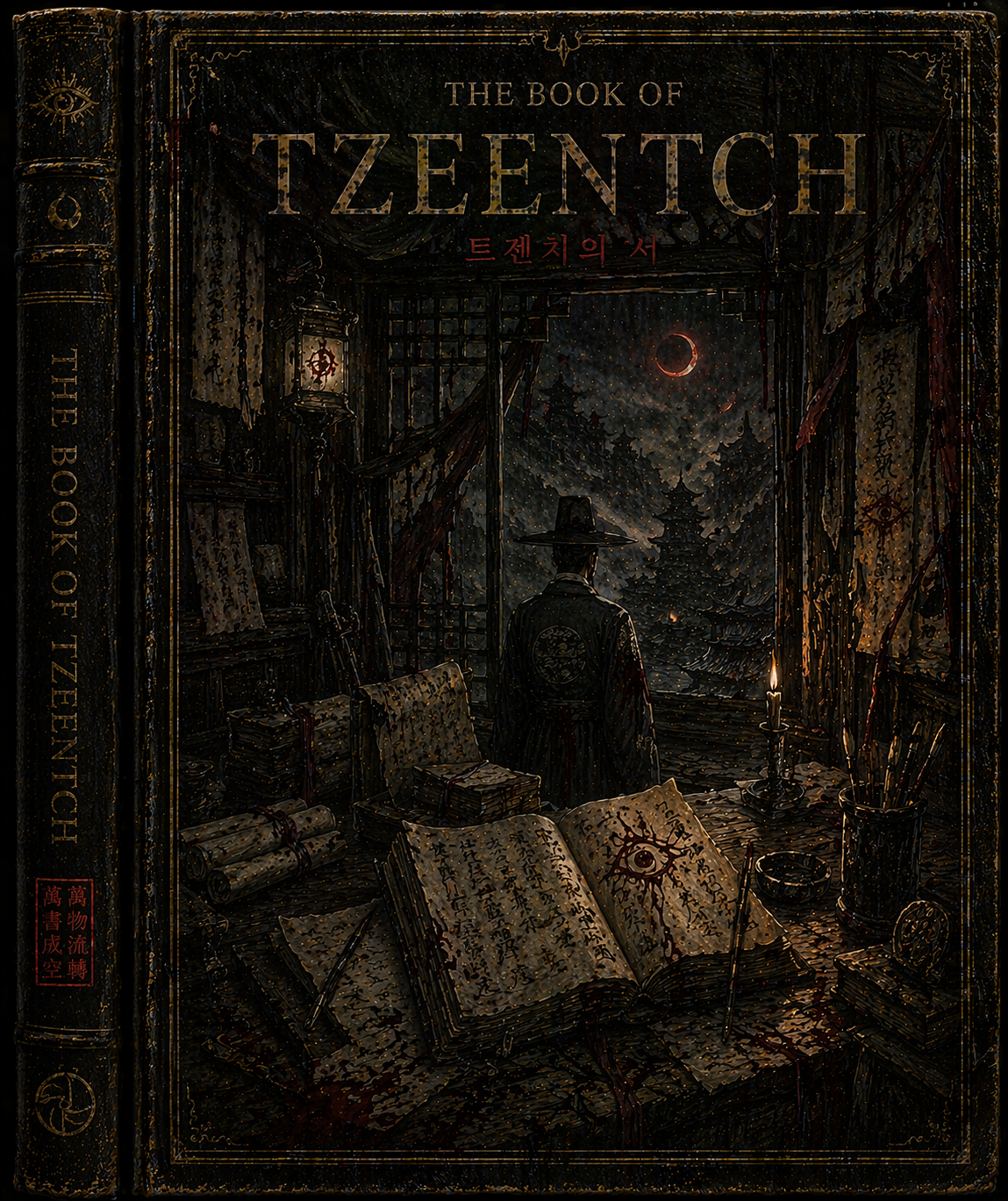

Alfred Richard


Genre: Dystopian
Setting: Shop
Required Scene: Finally Finishing a Book
https://www.youtube.com/watch?v=vOYHbSwF2Pw&ab_channel=RestfortheWicked
The old order that once served the people is now devouring them whole.
Two wars shattered Sajik’s mandate: first came the Wae, and with them, a fleeing king who abandoned his people.
Then came another, crowned by traitors, kneeling beneath a barbarian’s boot to beg for his life.
But it was the people who paid the debt.
Families fled their ancestral lands as fire consumed the land registers.
Infants were torn from cradles and named for wars they could not name.
The court, once the axis of order, watched in silence as the realm unraveled.
In the mountains, fathers were cut down by the blades of roaming brigands.
In the fields, sons were broken beneath the weight of tax and conscription.
The moon waned and waxed once more. A new king rose.
Pale light returned to the broken villages, as if heaven had taken pity.
But soon, clouds veiled the moon once more.
The throne was won not by grace, but by blood.
The literati lay purged, the streets still echoing with unrest.
The young king remained veiled, not by mystery but by the silks of the Grand Queen Dowager.
The court had soured into a den of gamblers, where clans cast their names like dice and whispered oaths carried more weight than law.
Royal officials murmur, “For now, Wolgok Lee held the Queen, but not the tide.”
Soon, the king entered the main hall of Seonjeongjeon.
Draped in royal robes far too heavy for his slight frame, he looked less a monarch than a schoolboy playing dress-up.
“His Majesty approaches!” cried the court attendant.
All heads bowed low.
The boy ascended the steps to the throne, his gait uncertain beneath the weight of silk and expectation.
He glanced over the assembled ministers, eyes wide, face pale, and spoke in a voice that cracked with youth and fear.
Then, he fell silent, seated upon the throne like a figurehead carved of porcelain.
In his stead, the Grand Queen Dowager’s eunuch stepped forward and proclaimed,
“By His Majesty’s command, the Bibyeonsa Council shall now convene.”
Voices rose, filling the chamber with bitter contention.
This marked the third convening of the Bibyeonsa Council this month.
Ever since the night the blood moon loomed over this land, something in the people had turned, at first a murmur, then a murk, now a madness.
After the first council, the royal army was dispatched to quell the unrest in Cheongju.
They left nothing behind. The village was put to the flame, and all bound by blood or rumor to the uprising were cut down.
Three generations erased in a single sweep.
Geon had been standing quietly to the side of the chamber doors, ears attuned to every shouted word behind them.
Beyond the closed doors, the voices of ministers cut through the air in clipped, formal cadence.
Reports were being read aloud, follow-ups to the Cheongju purge.
The initial unrest, they claimed, had been “extinguished without remnants,” yet the land had not quieted.
There were mentions of new disturbances near Sangju:
Tongues twisted in ways no dialect could explain, as if speech itself had rotted, bleeding from the ears, their livestock born with twisted limbs.
In Haeju, entire households were found immobile at dawn, alive, but glass-eyed, unresponsive, their bodies marked with crude spirals etched in soot and ash.
A courier had vanished en route to Andong. Only his horse returned, foaming and blind.
Though no one said the word, the silence between lines hung heavy:
this was not a rebellion. It was a contagion of mind, of body, of land.
Geon, standing outside.
What had been scorched in Cheongju did not vanish; it slipped beneath the skin of the land, waiting.
At last, amid a lull in the storm of voices, the doors creaked open.
A palace eunuch, eyes sharp and voice sharper, gestured him forward.
“You have been called to stand before the Council.”
The room was crushed beneath a heavy silence.
To the left sat the Andong Kim clan; to the right, the Wolgok Lee clan.
Their eyes, sharp as blades and ready to tear each other apart, now turned in unison toward him.
Even without a word, everyone could feel it. Something had already been decided.
Geon quietly knelt and bowed his head low.
“Your Majesty, this humble servant offers his greetings.”
Then the Chief State Councillor stepped forward and spoke:
“This disturbance is of a different nature than the usual unrest.
The strange afflictions among the people stem not from simple rebellion, but from some unnatural anomaly.
It is imperative that we dispatch one with sound judgment and clear discernment
to stabilize the situation before it spreads further.”
A few discontents escaped from the Andong Kim clan’s side, barely masked beneath their composed faces.
“Therefore, I humbly recommend Lee Geon for this task, and ask that Your Majesty grant your royal assent.”
A murmur of polite dissent rose from the left.
Then, rising with the deliberate calm of one well-versed in court games, the Minister of War, an elder of the Andong Kim clan, stepped forward.
“Your Majesty,” he said with a shallow bow,
“Such grave matters demand not only discernment, but balance.
To ensure impartiality and prevent confusion among the local officials, it would be prudent to dispatch an additional observer, one of proven loyalty and discipline.”
He paused, casting a brief glance toward the Chief State Councillor before continuing.
“May I suggest Kim Jaeyun of the Ministry of Justice? He is… discreet, and unwavering in duty.”
The unspoken message rang clear: We will not leave this matter solely to the Lees’ hands.
Then, with thinly masked contempt, the Minister of Rites from the Wolgok Lee clan rose.
His smile was calm, but his words bore a poisoned edge.
“Indeed, Your Majesty, balance is ever a noble aim.
But let us not forget. It was in lands administered by the Kim clan that the first signs of affliction appeared.
If we are to ensure true clarity, perhaps those closest to the source should refrain from speaking with such certainty.”
The chamber tensed.
The Minister of War did not flinch.
“Curious, is it not,” he said, “that every mark found in the afflicted villages, crescent-shaped, so closely resembles the ancestral crest of your Wolgok Lee clan?”
His eyes narrowed.
“You call it a coincidence. I call it rot.”
A hush fell over the chamber.
The elder of the Wolgok Lee clan, long silent like a thundercloud brooding at the edge of a field, let the corner of his mouth lift ever so slightly.
“To hear such words from the Minister of War, one might think you were hoping that mark would appear.”
The Minister turned his head slowly, meeting the old man’s gaze with practiced calm.
“Hope, no. Merely calling for prudence, given the nature of what we face.”
The elder gave a soft chuckle and nodded.
“Prudence, indeed. We wouldn’t want another purge like the one in the Year of Gyeyu, now would we?”
The Minister’s brow twitched, ever so slightly.
Once in the year of Gyeyu, under the name of ‘investigation’, entire households had been dismantled.
Some among them had returned not long after, silent, humbled, and quietly pledged to the Lee clan, their wealth intact if not their pride.
“…As it was then, time will reveal who the true enemies of the court are.”
The old man said nothing more, and the Minister of War cleared his throat.
When the Chief State Councillor cleared his throat, the tension in the chamber began to ebb.
Soon after, the eunuch stepped forward and spoke:
“His Majesty grants permission for a full investigation.”
It meant a temporary truce. At this moment, neither faction held the decisive stroke to overturn the board.
But the meaning was unmistakable:
The first blade of this quiet war had been placed in the hands of Geon, Inspector of the Royal Tribunal, and Jaeyun, Assistant Director of the Ministry of Justice.
The eunuch raised his voice again.
“Inspector Geon, under the direct authority of the Throne, has already earned His Majesty’s trust through his skill in investigation and restrained conduct.
Assistant Director Jaeyun, with his grasp of the Ministry’s inner workings, is known for his ability to root out deviation and disloyalty.”
The message was clear: the appointments were a deliberate balance, allowing each clan to check the other and shackling both from moving too freely.
A forced calm settled between the rivals, but someone in the room had surely finished their calculations already.
This was no mere rural disturbance.
Beneath the surface, long shadows began to stir once more, each reaching for the other’s throat.
Just before dawn, the outer gates were silent.
Assistant Secretary of the Ministry of Justice Jaeyun stood beside his horse.
White breath streamed from the animal’s nostrils. Beyond it stood Inspector Geon of the Royal
Inquisition Bureau, quietly tightening his saddle straps as he watched him.
“Nine horses. Four men each. Whether they’re escorts or informants, well, we both know the truth.”
Jaeyun gave a quiet nod.
“We’re hardly in a position to trust one another, are we?”
Geon tugged at the reins and murmured,
“Very well. Then let us see what hell looks like.”
They rode hard until they reached the abandoned village, not marked on the map.
Hooves sank heavily into the mire. The alleyways were windless, yet the air was thick with the scent of soot.
Beyond the curve of the road, Jaeyun found a woman standing before a courtyard. A woman with a familiar face stood there.
“Did you see that?”
Jaeyun asked, quietly.
Geon offered no reply.
Jaeyun, startled, reined in his horse and turned his eyes toward the house.
Books lay strewn across the flagstones, their pages fluttering though there was no wind.
Some were open, others split and rotting.
A stone statue stood at the center, barely taller than a man, its face cracked clean down the middle.
From the fissure, a dark mineral gleamed, a glint like coagulated blood under moonlight.
Jaeyun alighted from the horse and stepped closer.
Something beneath the pages whispered.
A sound not made by ink or paper, but by teeth.
There, by the statue, was a symbol. A moon.
More precisely, a crescent moon, within which an eye was drawn.
The image bore a disturbing resemblance to the crest of the Wolgok Lee clan.
It reminded him of a seal he’d seen in childhood books, or perhaps the illusions he’d glimpsed on the walls while burning with fever.
No. No, this was…
Something seized his ankle.
He looked down, breath caught.
A hand was reaching from the muck.
It did not belong to the living, yet it clutched with a desperation that chilled the spine.
Jaeyun wrenched himself free and stumbled backward.
Then Geon was there.
He turned his head slowly, eyes fixed on Jaeyun.
His pupils were vacant.
And on his tongue, drawn in blood, was the mark of the moon.
“Assistant Secretary Jaeyun.”
The voice was not Geon’s.
“This has been decided long before your time.”
Jaeyun raised his eyes to the heavens.
A red crescent moon hung in the sky.
No, it was gazing down at him.
And it spoke.
“Welcome,” it whispered.
“Your feet have already crossed the threshold.”
Jaeyun awoke with a gasp, sitting bolt upright.
Through the curtain’s edge, the gray of early dawn seeped in. From afar, the temple bell rang.
He touched the nape of his neck, damp with sweat.
He raised a trembling hand to his forehead.
It was not blood.
But the sweat clinging to his skin felt thick, heavy, as if stained by something unseen.
Outside, perched atop the eaves across the courtyard, a bird watched him.
A crow, he thought at first. But then he saw the legs, three, not two.
It did not cry. It did not move.
It simply stared, its feathers damp with dew, its silhouette haloed in the dim gray light.
It tilted its head, gaze fixed on Jaeyun.
Then, with a sudden beat of wings, it leapt as if to take flight.
But the sky did not take it.
The creature fell. Struck the earth with a soundless thud. And lay still.
“Assistant Secretary, it’s time we departed.”
Geon stepped into the courtyard, fastening his gloves.
Jaeyun stood motionless, eyes fixed on nothing, his complexion pale.
Geon followed his gaze for a moment before frowning.
“It seems the plague has reached the capital’s outskirts.”
His voice remained even.
“But… I’ve never heard of it causing something like that.
That thing. Could a plague really do such a thing? Inspector, how could you possibly”
“We’ll know more once the investigation begins.”
Geon cut him off, his tone clipped.
“We don’t have time to waste on speculation.
Thanks to your collapse upon seeing the statue, our departure is already delayed.”
At those words, Jaeyun abruptly rose, as if spurred by something unseen.
He was still in his nightclothes.
He ran, almost blindly, for what felt like ages until he finally arrived at a house. The house from his dream.
His breath caught in his throat.
But there was nothing.
The statue was just that, a statue.
There were no cursed books, no whispering beneath the pages, no blood-drawn mark of the moon.
‘Had it never existed at all…?’
Soon after, Geon and the guards caught up to him.
Jaeyun struggled to explain what he had seen, breath ragged, voice trembling.
Geon listened without a word, his expression unreadable.
Finally, he frowned slightly and said,
“It was likely just a bad dream, Assistant Secretary.”
Jaeyun fell asleep three times, and three times he awoke on his journey to Mungyeong.
The first was a dream: beneath a sky turned inside out like the surface of water, a crimson crescent moon hung inverted. Beneath it, a headless horse bled as it called his name.
Inside its severed neck, there was no heart, only a pulsing orb, carved with the same eye-mark that dwells within the moon.
The second was a dream: rice stalks grew downward from the ceiling, veiling his eyes. At the end of each stalk, small, wet eyes dangled and blinked in unison, staring directly at him.
The stalks swayed, though there was no wind, and they whispered in a language he could not understand. No, it was a language of no humans.
But one message was clear:
“We are watching you.”
The third was a room without door or window, no light, no warmth, and a kind of silence that felt foreign to breath itself.
A hand touched his forehead: soft, damp, disturbingly tender, like moonlight made flesh.
And then, an eye opened, not in the room, but within him.
The presence borrowed his tongue and spoke:
“When you reach the southern gate, complete the book that bears my sigil.”
At that hour, behind the post station by the stable, Geon stood, pulling his collar tight against the cold.
The second letter had already been burned to ash, and the scent of soot lingered faintly on his fingertips.
There was no moon in the sky, yet within the clouds, a sliver of light, curved like a crescent blade, shimmered faintly.
From beyond a haystack, a shadow approached without a footfall. Though the straw was pressed beneath each step, no sound followed.
The man was clad in a neat robe, composed down to his fingertips, with a poise refined and unbroken.
He spoke more with his gaze than with his tongue, and in his eyes and lips lay the sharp stillness of something long-honed.
At the cuff of his sleeve, a faint crescent-shaped embroidery was stitched with undyed thread; within it, a single dot was sewn, the sigil of House Wolgok Lee.
In the light, it reflected like an eye; in the darkness, it resembled a closed one.
Without a word, the man drew a sealed scroll from his robe and held it out to Geon.
The scroll was bound in jet-black thread, and at its end was affixed a seal, a crescent cleft by a blade, with a tiny eye-like mark carved deep within.
“The details of the book lie within,” said the man in a low, firm voice.
“It was once hidden, and now lies concealed in a house on the Mungyeong.
Should it fall into unknowing hands, none can predict the outcome.
His Lordship commanded it be retrieved without fail.”
Geon took the scroll and tucked it deep into his robe.
“And the nature of the book?” he asked.
The man lowered his gaze in silence before answering with brevity.
“A tool.
The kind that can place the final stroke on this game.”
And then, in a voice scarcely above a whisper, he added:
“A tool will give power to the clan and restore the order of this land once more.”
There was a weight to the words, an unspoken meaning folded between the lines.
Yet the man offered no more.
With a subtle nod, he turned and walked past the straw, vanishing into the shadow of the post station.
The straw remained pressed beneath his steps, but no footprint marked where he had tread.
Geon understood it.
Two suns rose and fell, and three moons waxed and waned, they arrived at the gate of Mungyeong.
The Mungyeong greeted the two envoys beneath a stillness thick as fog.
The young magistrate, barely grown into his beard, bowed low the moment their feet touched the veranda of the county office, a wide smile plastered on his face.
But beneath the surface, a suffocating current of fear churned.
He was neither the son of a noble family nor a man who had passed the state examination.
His seat had been bought, silver discreetly exchanged, strings silently pulled.
Thus, the ledgers he submitted were hollow shells, and the names of those broken by forced labor or grain debts were never written in ink.
Those taken at the village’s edge, pressed into the military or conscripted into toil, had returned maimed, if they returned at all.
The magistrate knew well: his post rested atop rot.
And so he feared not inspection, but judgment.
Geon and Jaeyun moved through the town with differing paces, guided by different winds.
Jaeyun, born of power, torn between loyalty and justice, sought the truth in the people’s eyes.
But those eyes had long ceased to be human.
The cells in the county jail overflowed with the deranged, and they no longer wept but howled. Their bodies were twisted, their mouths ringed by grotesque scars shaped like crescent moons and watching eyes.
The registry handed to them by a court servant bore signs of tampering: names cut off mid-line, addresses smeared or missing, entire districts vanished from the page.
Geon saw it for what it was. A deliberate erasure.
But more chilling was what he deduced: the closer one lived to a certain region, an old, now-erased district, the more severe the transformations.
He quietly closed the page. And said nothing.
That night, Jaeyun turned to Geon and said, “I’ll be out again tomorrow.
There’s more I need to see alone.”
Geon gave a slight nod. “As you wish.”
But the moon that rose that night was no full disc.
It was hollow, and it watched them both like an unblinking eye etched into the sky.
That night, Jaeyun stepped into a darkness without doors or windows.
No footsteps. No wind.
But a voice, clear and deep, bloomed inside the silence.
“You’ve walked far for someone still reciting Confucius in his sleep.”
Jaeyun paused. His heart beat once, heavy.
“Who are you?”
“I am the one who watched when your kings fled.
I remember when law was a name whispered with reverence, not fear.
I remember when ink meant covenant, not command. And so do you.”
The voice curled gently.
As the voice spoke, the air began to shift.
The walls of the dark bent slightly inward, though there were no walls.
His breath no longer returned to him.
Instead, it folded away, as if being drawn into something vast and unshaped.
A texture spread across the silence, not sound, but a pressure behind the eyes, like a word trying to be spoken in a language the brain had never known.
Jaeyun felt his thoughts slow, not from fear, but because something else had begun thinking in their place.
Then came the scent, not of rot or fire, but of old ink, spilled long ago onto parchment that never dried.
Beneath his feet, the ground shifted, and for an instant, he saw symbols blooming like mold beneath the surface.
They faded as quickly as they came, but they had already been read.
The voice continued, undisturbed.
“They buried the covenant, but it still breathes. Not in the palace. Not in their blood. In you.”
“You still believe in order. That it can be restored.”
“Of course I do,” Jaeyun said, his voice thin. “Without it, we are no better than beasts.”
“Then let me give it back to you.”
A pause. Then:
“Not the illusion they sold you.
Not the ledgers they cooked nor the rites they hollowed out.
I offer a new order.
One that cannot be bought, broken, or buried.
One written not by clans, but by will. By you.”
His voice seemed to pierce straight into Jaeyun’s heart.
“But, I am not a ruler,” Jaeyun murmured. “I’m not even a ROYAL by blood.”
“But you are the one who sees.
The one who still believes that names should mean something.
That oaths must bind, not bleed.”
The voice grew quieter, more intimate.
“Tell me, when you saw the twisted children, the empty eyes, the broken fields, did the king answer you?
Did the court rise to correct itself?
Or did they bury it all in dust and silence?”
Jaeyun gritted his teeth.
“You see?
They have abandoned order.
You are the last one who still calls it sacred.”
“…What do you want me to do?”
“Write,” the voice whispered.
“Take up the book, and restore the law.
Not theirs. Yours.
I will give you the language.
I will lend you the fire.
The world will kneel not to blood, but to meaning again.”
Jaeyun hesitated. His fingers trembled.
“Will it be just?”
“If you write it so.”
A long silence.
Then Jaeyun asked, barely audible,
“And if I refuse?”
“Then let the rot take everything.
Let every name be forgotten, and every law be broken.
Like the one you couldn’t save”
His breath caught. He lowered his gaze.
And when he looked up again, the brush was already in his hand.
From that night on, the line between waking and sleep thinned.
He sensed unseen eyes watching him even in daylight.
The villagers’ voices fractured into discordant tones, and the sunlit sky looked stained, warped by some unseen hand.
Rice stalks still bore eyes that watched without blinking.
Red ink trickled from cracks in doorways, and the wind moved like brittle paper across a fraying world.
He no longer knew whether he was walking through a dream or if the dream was walking through him.
But he understood one thing with perfect clarity.
All roads now led to the book.
In the fading light of dusk, Jaeyun found himself wandering beyond the edge of the inhabited residential district, his feet moving with a will not entirely his own.
The air grew still and heavy, and before him loomed a collapsing structure, once a bookshop, now barely distinguishable from the slums that crept like rot along the outskirts.
Its signage hung askew, the characters long worn away by wind and mildew.
Yet something about the place drew him, as if memory itself was folded in its shadows.
He crossed the threshold.
The silence inside was unnatural.
No creak of wood, no whisper of wind.
Shelves, empty and warped, leaned like gravestones.
Dust hung in the air not as a presence but as a weight.
Still, a sensation pressed against his thoughts.
The space within seemed oddly larger than its outward shell, as if the building had been turned inside out, stretched by a logic not born of earth.
Every step echoed too long. Every corner turned deeper than expected.
At the far end of the room, half-hidden behind a collapsed partition, stood an antique wardrobe.
Its lacquer was cracked, the wood bruised by time, and across its surface was drawn a single eye, delicate and bleeding into the grain.
Jaeyun stepped closer.
The eye pulsed faintly in the dimness.
His fingers, cold and trembling, moved the wardrobe aside.
Behind it waited a door.
There was no hinge, no knob.
Just a vertical slit of darkness carved into the wall like a wound.
From within, he felt not wind, but breath.
And beyond it, something was watching.
Inside the hidden chamber, the air was thick and still.
At its center sat a grotesquely altered old man, limbs twisted in unnatural angles, skin clinging too tightly to bones that seemed to shift beneath.
His mouth stretched slowly into a smile, not of welcome but of knowing.
His eyes, pale and milked over, locked onto Jaeyun with unsettling clarity.
Then came the voice, cracked like parchment and far too calm.
“What you seek lies over there,” he said, lifting a crooked finger toward the far wall.
Jaeyun followed the gesture.
Resting upon a desk was a book, bound not in leather but in human skin, its surface marked by the twin symbols that had followed him through every shadow of the village: the crescent moon and the watching eye.
Beside it lay a brush carved of bone and a shallow dish of ink, red as fresh blood and unmoving in its bowl.
His hand moved before thought could catch it.
As if pulled by a dream, he took up the brush, dipped it into the ink, and opened the book.
The pages were dense with lines he could not read, yet they seemed to shift and breathe beneath his gaze.
All had been filled but one. Only the final page remained.
A whisper rose behind his ears, curling like smoke through the folds of his mind.
It spoke no words, but its meaning was clear.
His fingers trembled, then stilled.
The brush lowered.
The page waited. His hand began to move, slowly, with the certainty of someone who already knew what must be written.
As if the story had been there all along, waiting only for him to finish it.
Just as the brush’s tip hovered to mark the final stroke, a memory surged upward like breath breaking water.
It was not summoned but demanded.
A voice, soft and half-forgotten, whispered his name.
He saw her again, his wife, standing beneath the courtyard apricot tree, sunlight scattered in her hair, her hands busy with nothing and everything at once.
He recalled the one he couldn’t save.
A voice, faint and long buried, rose like breath breaking water. It whispered his name.
He saw her then, not as a vision, but as memory, sharp and whole.
The memory struck him clean through.
His hand froze.
The ink on the page began to pool and dry.
Jaeyun gasped.
The presence in the room snarled in displeasure, its promises curdling into silence.
He staggered back, tore a strip of jade-colored cloth from his sleeve, and wrapped the book in trembling hands.
Bound and hidden, the whispers weakened.
He turned toward the exit, his breath shallow but steady, the night outside calling him back toward order, toward reason.
But before the door, a sharp wrongness bloomed in his chest.
A foreign pressure, sharp and cold.
He looked down and saw the glint of steel.
Geon stood before him, hand still pressed firm against the hilt.
His face was quiet, eyes unreadable.
“You followed me,” Jaeyun whispered, blood already thick in his mouth.
Geon said nothing. Not at first.
Only when the book slipped from Jaeyun’s grasp did he speak.
“I never stopped.”
Blood quickly soaked through his robes.
Jaeyun leaned against the wall, struggling for breath, and the book slipped from his fingertips, landing gently on the floor.
A crimson stain spread across the jade cloth like ink seeping through parchment, and his vision grew dim.
Before him stood Geon, saying nothing, sword still unsheathed.
“Why,”
Jaeyun spoke with a voice quivering from blood and breathlessness.
“You know what that book is.
What the flame-shaped eye will summon to this land.
Once completed, it will rot everything, taint everything.
You knew that.
And still, you mean to place it in the hands of the Lee clan?
Was it all for their rise? For those men’s glory?”
His voice cracked, his gaze no longer filled with pain but with a searing fury.
“So this is the order your clan spoke of?
Throwing innocent people into the military courts, justifying a festering tyranny in the name of the thing?
Is this the power you sought to preserve, the justice you claimed to uphold?
Not once, not once did I doubt you.
And yet the blade you hold, is that the true face of the order you serve?”
Geon remained silent, the sword steady in one hand, the other clenched and empty.
“A man who serves rotting power dares to speak of justice. How laughable.”
He lifted his head at last, eyes cast into the void above, and then spoke in a low, firm voice.
“I am not of the Lee.”
His tone was calm, but each word was bitten down like iron.
“I have no surname, no ancestral seat.
Since that day, I have lived without a name.
My wife was killed in the street for merely crossing paths with a nobleman’s palanquin.
My children were dragged into the conscription courts for carrying the blood of sinner and died unnamed.”
He closed his eyes briefly, and when he opened them again, his voice carried the weight of ash and memory.
“In the year of Gyeyu, the purge swept our province,
I found an identity tag discarded beside a corpse in a rice field.
A name carved into the tag, a minor branch of the Lee family.
The man it once belonged to was already stiff with death.
No one mourned him. No one remembered him.
So I took it.
For this moment, I pretended to be him, forced my way into a family tree I did not belong to, climbed through their ranks like a dog under the floorboards.
But the name was never mine,
and not a drop of that blood ever flowed through me.”
He raised his head once more.
“That day, I understood.
This so-called order was never for the people.
It was a chain, forged for the comfort of those who call themselves noble.
Justice was never ours.
It was a jeweled mask worn only by those in power.
I never believed in such order,
and now I will remain only as the one who destroys it.”
Geon slowly approached Jaeyun’s cooling body.
His footsteps moved like ripples across the windless chamber, and the final shadow fell across Jaeyun’s face, still tilted against the wall, breath slipping away.
His eyes remained half-open, though they no longer saw; his lips trembled faintly, as if trying to shape a final word, already too distant from the language of the living.
Without a word, Geon knelt.
He gently lifted the book from the floor, now stained with a bloom of red that spread like ink across the pale blue wrapping cloth.
The touch of it against his skin blurred the line between blood and ink.
He reached for the brush.
Once, this hand had recorded laws, had written the names of the living and the dead.
Now, it moved to inscribe a forbidden sentence.
In the weighty silence, the final page was turned.
Though the air had not stirred all evening, the moment the parchment shifted, something unseen twisted in the space whispers, barely formed, slid between the beams of the ceiling and the cracks in the walls.
Geon dipped the brush without hesitation.
The red ink clung to the bristles, quivering faintly,
like a language long buried waking in the deep.
And then, from his hand, emerged a sentence no one had dared speak, no one had ever written.
What he wrote was no mere line.
It was the end of an age, the beginning of another order.
The eye of flame stared from the page, unblinking, and even the moon outside could not turn away.
Geon understood.
This one sentence would shatter a thousand-year myth and topple a tower built in blood.
But he did not falter.
He met Jaeyun’s eyes one final time, then wrote, slowly, steadily, with no flourish, his destiny.
When the book closed, the air in the room had changed.
Something had ended.
Something else had begun.
And Geon rose to his feet, his face bearing neither joy nor grief.
Then the door opened.
He stepped through, into the darkness behind the old wardrobe.
And what remained was a completed sentence, a fading breath,
and the end of an era, bathed in moonlight.

Author: ozpinhead
Oz
